
May God Forgive Us
by Robert Welch

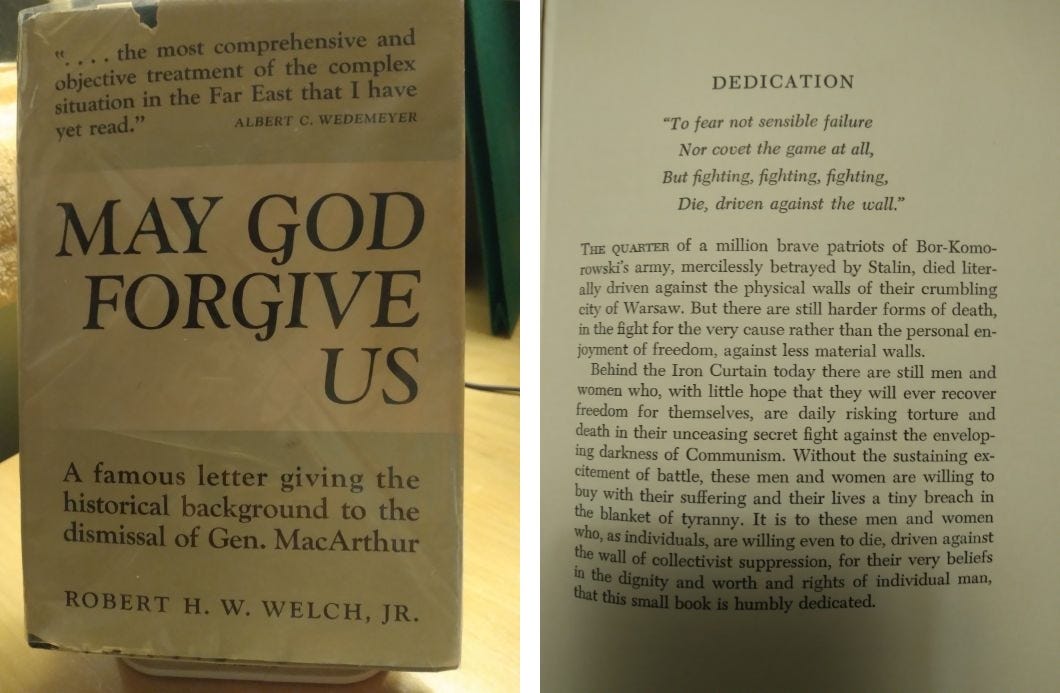
Robert Welch was a politically active businessman in his family’s confectionery business, the James O. Welch Company, in the state of Massachusetts, as well as the founder of the John Birch Society.
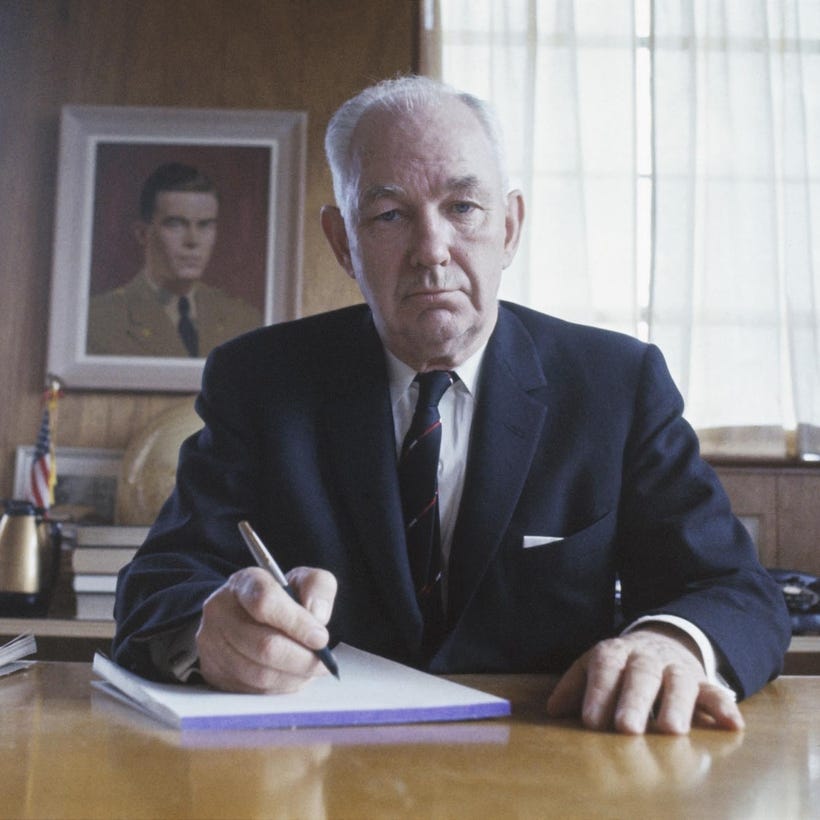
After giving a speech about Truman’s secretary of state Dean Acheson and General Douglas MacArthur to the New England Council of Young Republicans, a fellow businessman wrote him a letter with questions about his speech. In response, Welch wrote him a long letter on July 4, 1951 explaining why Truman fired Douglas MacArthur as head of the U.N. Command in South Korea. His friend apparently shared the letter with others, as people began requesting copies of it. Eventually, the letter was published as a book, entitled May God Forgive Us in 1952.
Again, May God Forgive Us is a later edition of that book, combined with a short biography of General Chiang Kai-Shek , which the author wrote as a magazine article for the periodical American Opinions in 1957. I bought both editions because I thought the later one was a sequel to the earlier one. The later one alone would have been enough. This review includes only that part of the book that was in the original edition pictured above. I’ll post about Welch’s biography of the Generalissimo in a separate post about the later edition.
The rapid post World War II spread of Communism and the U.S. government policies that helped enable the spread, despite Communism’s unpopularity with the American people (and the people of the countries concerned) illustrates a recurring Communist strategy. When popular revulsion against Communist expansion is on the rise, the Communists manage to get one of their own sympathizers (whom the people do not recognize as such) to gain leadership of the opposition to either dissipate its energy or guide it to serve Communist aims in some non-obvious way, often resulting in the betrayal of our allies. This is why the book is titled the way it is. May God forgive the American people for allowing our own government to become so infiltrated that it works in the interests of our enemies and hurts our friends.
Mao Tse-Tung’s takeover of the Chinese mainland could have been stopped at any time by the U.S. government if the government had simply given Chiang Kai-Shek the military supplies that Congress had already voted to give him. But several aspects of U.S. policy towards China stood in the way:
During the Yalta Conference (February 4-11, 1945), control of key areas in north China, such as Manchuria, Port Arthur, Dairen, the Kurile Islands, and Outer Mongolia were given to the Soviets, without even consulting with Chiang Kai-Shek, as a bribe to get the Soviets involved in the Pacific war--despite General MacArthur informing Franklin Roosevelt that this was militarily unnecessary. The U.S. was represented during the drafting of the Yalta documents by Soviet agent Alger Hiss.
General George Marshall decided to establish an arms embargo with Chiang Kai-Shek’s Nationalist government at crucial times during the war while the Soviets were sending war supplies left behind by the Japanese in Manchuria to Mao Tse-Tung’s forces. The U.S. State Department also ordered U.S. naval ships to stand by and allow supplies to be delivered to the Chinese Communists (some of which were eventually used to kill American troops in the Korean War).
U.S. policy insisted on “unity” in China (i.e. pressuring the Nationalist government to accept the Communists, as a prerequisite to receiving military aid.
Truman and Marshall agreed to suppress General Wedemeyer’s report that accurately described Soviet aims in China and recommended that Manchuria be removed from Soviet control and placed under U.N. trusteeship.
The U.S. continued to withhold aid to Chiang Kai-Shek until it was too late for him to regain control of the mainland.
These policy decisions have their origin in the State and Defense Departments, both of which had been heavily infiltrated by Communists and their sympathizers.
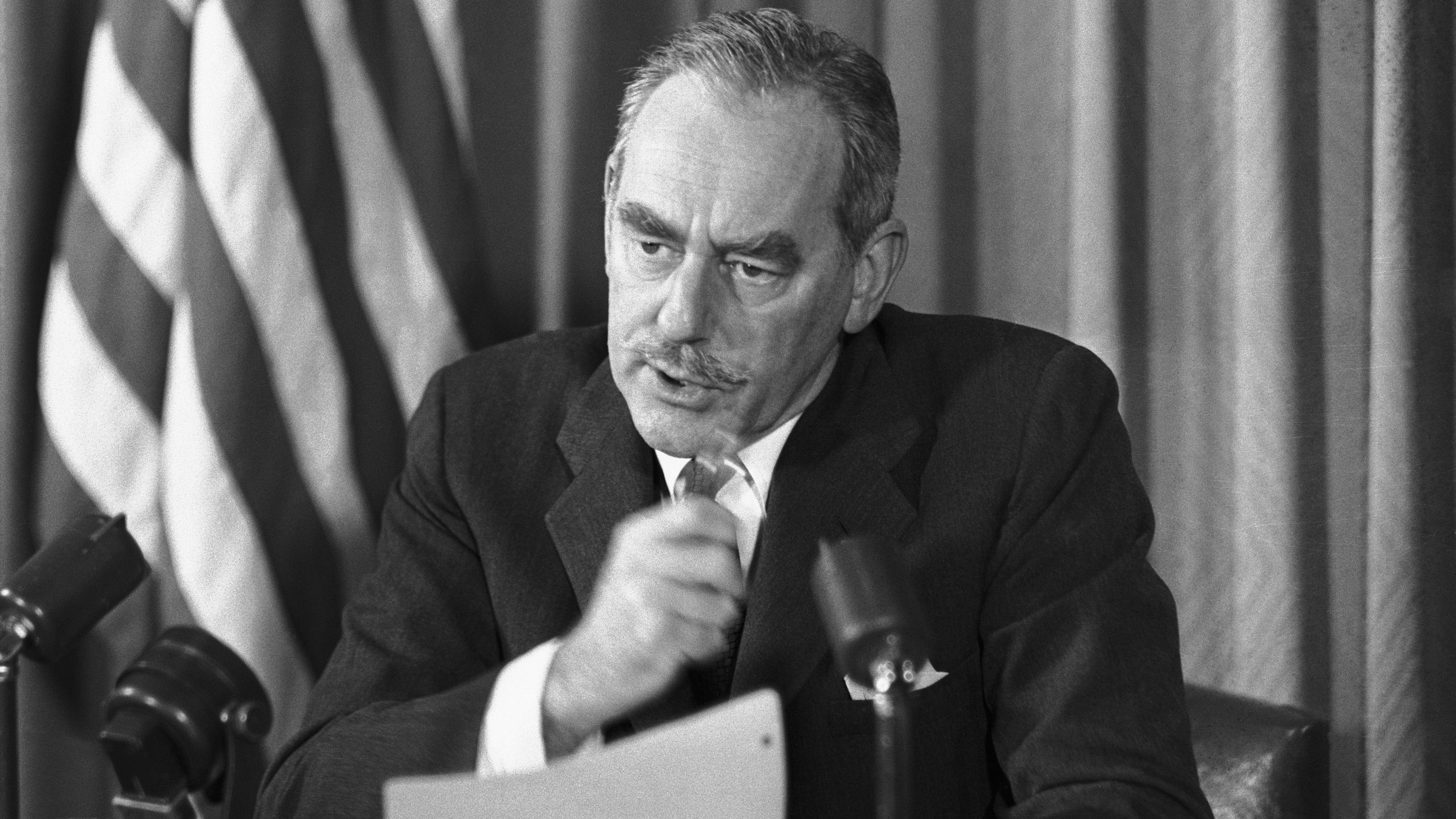
Dean Acheson, who became undersecretary of state in 1945, and secretary of state under Truman from 1949 to 1953, had a lot to do with formulating State Department policy, and Welch enumerates various issues wherein Acheson showed himself to favor courses of action that benefited the Communists:
He approved a $90 million loan to the Communist-controlled Provisional Government of Poland, against U.S. ambassador Arthur Bliss Lane’s recommendation.
He advocated giving U.S. atomic secrets to the Soviet Union outright.
His State Department was characterized by personnel who had been fired for Communist activity in one position resurfacing in some other capacity elsewhere within the State Department.
He bought into the view that the Chinese Communists were not real Communists, but “agrarian reformers” who were more worthy of American support than Chiang Kai-Shek’s “corrupt” Nationalist government.
He agreed with the British that Red China ought to be recognized as the legitimate government of China.
He tried to get U.S. support withdrawn even from Formosa (Taiwan), insisting that the island had no strategic value.
He favored establishing a “liberal” government in Japan (Acheson had a habit of conflating liberalism with Communism), which would have involved:
A large occupying army
Abolition of the Japanese monarchy and banishment of the imperial family to China
Dissolution of Japanese business enterprises
A purge of Japanese business executives
The seizure of securities representing business ownership away from the holders and distributing it to farmer’s cooperatives and labor unions which were Communist-controlled
On August 5, 1949, Acheson’s State Department issued a “White Paper” on China that pre-emptively recognized Mao’s Communists as the conquerors of mainland China before they had actually done so, and that minimized the State Department’s role in enabling it.
For all this, Welch does not claim that Acheson was definitely a Communist and a traitor to the U.S., but that he was at least a very left-wing socialist whose aims, whether deliberately or not, fell in step with Communist aims.
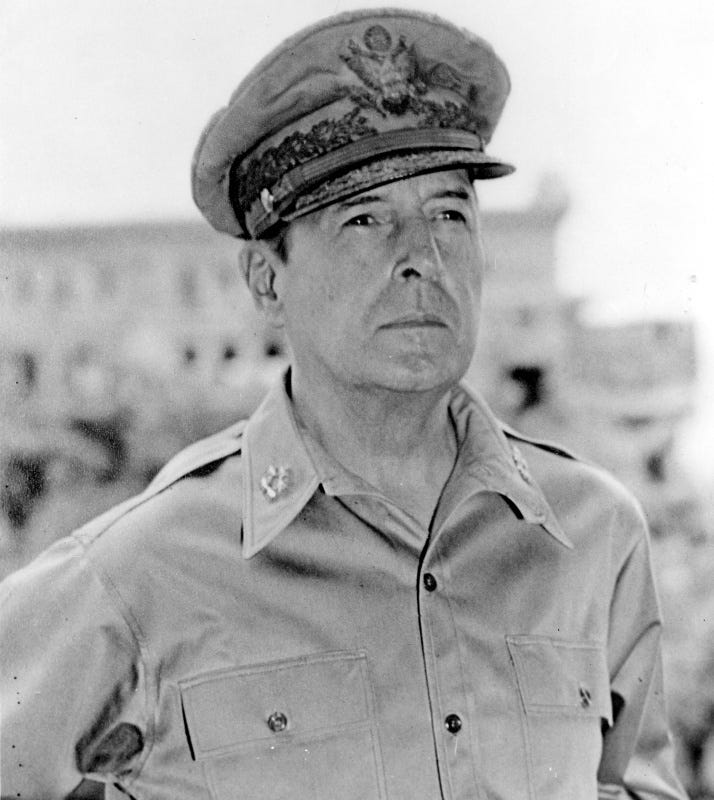
It was Acheson’s pro-Communist positions regarding China and Japan that brought him and General MacArthur at loggerheads. MacArthur was a staunch friend of Chiang Kai-Shek’s, supported Manchuria being kept out of Communist hands, whether Soviet or Chinese, recognized Taiwan’s strategic importance for U.S. naval operations in the region, and disagreed with Acheson completely about Japan. MacArthur stated that Japan was calm enough to require only 200,000 troops to keep order, so that large occupying army was unnecessary. He also succeeded in foiling Acheson’s Communistic plan for Japan, with the help of James V. Forrestal, undersecretary of the Navy and later, the first secretary of the Department of Defense. Had MacArthur been allowed to have his way about Manchuria, the Korean war would not have happened.
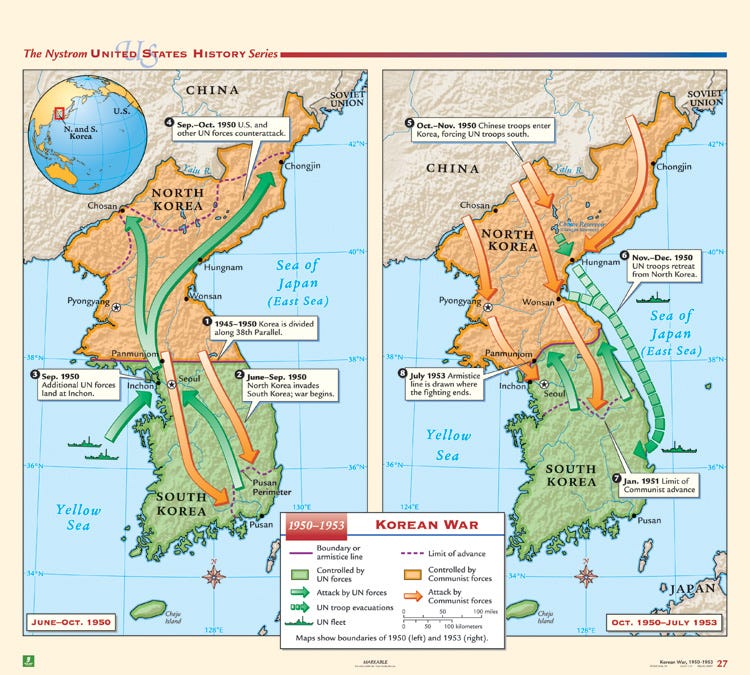
Welch points out that the Korean war was incited by the Soviets for much the same reason they incited the Spanish Civil War in the 1930’s--to serve as a trial run to test Communist troops and weapons (and give them combat experience) against the troops of a likely future enemy. In the case of the Spanish Civil War, it was the German troops who fought on Franco’s side; in the case of the Korean War, it was American troops. Neither war turned out the way the Soviets had hoped. Franco was victorious in Spain. MacArthur’s successful Inchon landing prevented Communist takeover of South Korea. This was yet another reason MacArthur had to go.
On February 22, 1952, Welch added a postscript to his original letter, which was included in both editions of the book. In it, he observes that in each country that fell to Communism since the Tehran Conference, which took place from November 28 to December 1, 1943, there is a pattern that is repeated that includes American assistance. This is a quite long list, including among others, China, Poland, Yugoslavia, Czechoslovakia, and Romania. The U.S. government since World War II has a history of giving moral and financial support to the Soviets, while hiding it from the American people.
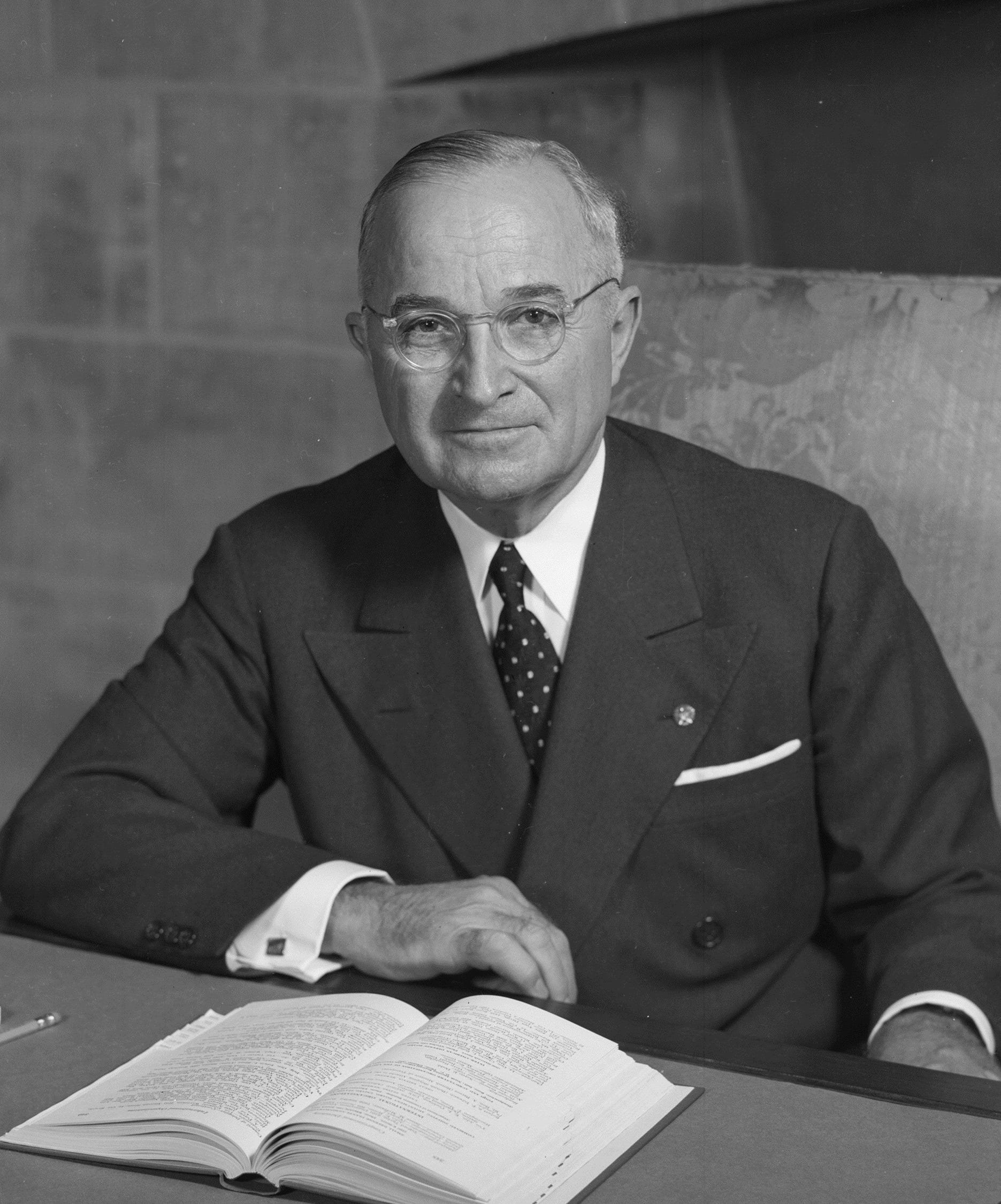
This begs the question: As President during this time of rapid Communist expansion--was Harry Truman a Communist? Welch does not think that he was one, ideologically, but that he was at bottom a politician and was subjected to Communist pressure, which he yielded to, since the far left gave the Democratic Party dependable political support.
Welch ends the postcript with some general premises on Communist methods:
Western principles of Christian charity and tolerance are taken advantage of by the Communists. These are two of their most effective weapons to manipulate their opponents.
People who rise to the top of the Communist Party hierarchy are people who are unscrupulous enough to do anything get there, and that includes murder.
Communists will use anything to gain control of a country, including treachery, infiltration, outlawed methods of warfare, temporary compromise and surface cooperation with their opponents, and recruitment of native born traitors.
Infiltration of the U.S. government, educational, cultural, economic, and other institutions has gone much deeper than the public even suspects.
Socialists and Communists tend to work in cooperation due to the natural affinity in their ideas and goals.
The press does not report on some Communist activites, in their desire to be seen as liberal and tolerant.
The State Department’s appeasement policy toward the Soviet Union is an oft-repeated excuse for letting them have their way. The reasoning is that they will start World War III if not. The truth is, if Stalin perceives a hot war is in his best interest, he’ll start one, and no amount of appeasement will stop it.
The allies of the United States are even more prone to Communist infiltration than the United States itself. The most effective thefts of atomic secrets were carried out by Soviet agents who had been given security clearance by the British government.
Where Communists have sufficient strength, they are confident enough to display some degree of outward weakness. But where there is real weakness, there must always be a show of strength to cover it up.
Welch’s conclusion is that General MacArthur was effectively fired by Joseph Stalin, through his agents working within the U.S. government.
This book certainly packs a lot of information into a small space. Years ago, I remember my father remarking, while we were watching a Korean War documentary on television that Truman was an idiot to have fired General MacArthur. When I asked him why Truman had done so (being ignorant of the history), he said that Truman felt threatened by MacArthur, whose popularity was sky high after World War II, and who might have supplanted him as President. And maybe he had heard stories to that effect at the time, but I found that explanation unconvincing. This book shows there was much more to it than that.